Medically reviewed by:

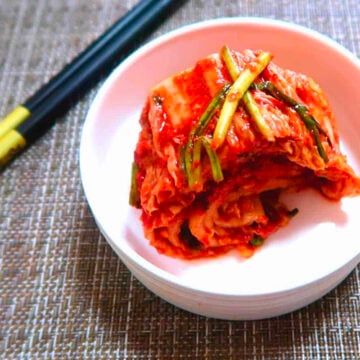
Kimchi, the spicy, fermented vegetable staple of Korean cuisine, has long been celebrated for its flavor and cultural importance. In recent years, it’s also gained attention for potential health benefits, especially its effect on the immune system.
But does kimchi really improve immunity, or is this just anecdote and tradition? In this article, we unpack the science, explain mechanisms, and present both supportive and critical perspectives.
How kimchi’s fermentation may influence your immune system
What makes kimchi biologically unique
Kimchi is traditionally prepared from napa cabbage, radish, and scallions, seasoned with garlic, ginger, chili, and salt, and left to ferment through the activity of lactic acid bacteria, primarily Lactobacillus species. This fermentation process does far more than preserve vegetables. It transforms the food into a biologically active product rich in probiotics (live beneficial microbes), prebiotics (fermentable fibers that feed those microbes), and bioactive compounds such as antioxidants from garlic, ginger, and chili pepper.
The connection to immunity is not direct but works through the gut. Roughly 70–80% of the body’s immune activity is associated with the gut-associated lymphoid tissue (GALT), a vast network of immune cells lining the digestive tract. When the microbial community in the gut is diverse and balanced, immune responses tend to be more proportionate and regulated. Foods like kimchi, which actively feed and populate that microbial community, are therefore thought to have downstream effects on immune function.
A clinical study published in npj Science of Food used single-cell RNA sequencing to analyze immune responses in adults after 12 weeks of regular kimchi consumption. The results were notable: participants showed enhanced activity of antigen-presenting cells (which initiate immune defense), more balanced differentiation of CD4⁺ T cells (which coordinate immune responses), and improved immune regulation overall. Importantly, the effects pointed toward a more finely tuned immune system, not simply an overactivated one, which may help prevent both underperformance and harmful over-responses like chronic inflammation.
Probiotics, postbiotics, and the gut, immunity connection
The immune benefits attributed to kimchi cannot be explained by probiotics alone. While live microbial cultures are a key component, the picture is more nuanced.
Probiotics from fermented foods can contribute to gut diversity, reinforce the intestinal barrier, and interact with immune cells in the gut lining. However, it is important to acknowledge that not all kimchi products deliver the same probiotic content. Commercially produced kimchi is often pasteurized to extend shelf life, a process that kills live bacteria. For those specifically seeking probiotic benefits, unpasteurized, traditionally fermented kimchi is preferable.
The emerging role of postbiotics
Perhaps less well-known is the concept of postbiotics, the bioactive compounds produced during fermentation, including metabolites, peptides, and structural components of bacteria. Research using animal models has shown that even heat-treated kimchi (in which live bacteria are destroyed) still supports certain immune markers, including intestinal IgA antibodies, which play a key role in mucosal defense. This suggests that immune benefits may not be entirely dependent on live cultures, but also on what the fermentation process produces.
This distinction matters in practice: cooking kimchi into dishes like kimchi jjigae (stew) may reduce probiotic activity but could still offer some immune-relevant effects through these postbiotic pathways. More research is needed to quantify these effects in humans.
What the evidence supports, and where gaps remain
The enthusiasm around kimchi and immunity is not unfounded, but it is important to read the research with a critical eye. Several studies using advanced techniques have pointed to meaningful effects on immune cell behavior and gut health in humans. Kimchi’s nutritional profile, including vitamin C, polyphenols, and capsaicin, adds further support for its role as part of a health-supportive diet.
That said, the limitations are real. Most human studies have been relatively small in scale and short in duration. A randomized trial conducted among college students, for example, found no significant changes in certain immune parameters after kimchi consumption, illustrating that outcomes are not universal and can vary based on individual microbiome composition, baseline diet, fermentation quality, and even the specific kimchi recipe used.
Kimchi is also not a medicine. It cannot prevent or treat infections, and framing it as an “immune booster” risks oversimplification. Immune function is complex and deeply individual. What kimchi may offer is a gentle, consistent contribution to gut health, and through that, to a better-regulated immune environment, rather than a dramatic intervention.
Conclusion: A flavorful ally, not a silver bullet
The current science suggests kimchi has genuine potential to support immune health, primarily by promoting a healthier gut microbiome and helping regulate, rather than simply stimulate, immune responses. Advanced human research points in an encouraging direction, and the food’s nutritional profile adds further credibility to its reputation.
At the same time, kimchi should be seen as one component of a broader healthy lifestyle, not a cure or preventive treatment on its own. Incorporating it regularly as part of a diverse, balanced diet is a reasonable and evidence-informed choice. Whether enjoyed as a side dish, added to soups, or eaten straight from the jar, kimchi offers both flavor and function, provided expectations are grounded in what the science can actually support.
Frequently Asked Questions
Does eating kimchi every day improve your immune system?
Regular consumption of traditionally fermented kimchi may contribute to better gut health and more balanced immune regulation over time. However, effects vary between individuals, and no single food guarantees improved immunity on its own.
Is store-bought kimchi as beneficial as homemade?
Not necessarily. Many commercial kimchi products are pasteurized, which can significantly reduce their live probiotic content. For maximum potential benefit, look for refrigerated, unpasteurized kimchi or prepare it at home using traditional methods.
Can kimchi help prevent colds or infections?
There is no clinical evidence that kimchi prevents specific infections. Its potential benefit is more indirect, supporting a healthy gut environment that may contribute to a better-regulated immune system over time.
How much kimchi should I eat for health benefits?
Research studies have typically used portions of around 100–300 grams per day. A small serving (50–100 grams) with meals is a practical and realistic starting point. As with any fermented food, starting gradually is advisable if you’re not accustomed to it.
Does cooking kimchi destroy its health benefits?
Cooking kimchi eliminates live bacteria, reducing its probiotic content. However, emerging research suggests that fermentation-derived compounds (postbiotics) may still offer some immune-relevant effects even after heating, though human evidence for this remains limited.
Last updated
March 28, 2026Medically reviewed by:
Sources
- Single‑cell analysis reveals kimchi’s immune modulation:
https://www.sciencedaily.com/releases/2025/12/251216081945.htm - Kimchi supports balanced immune responses:
https://www.koreatimes.co.kr/lifestyle/travel-food/20251220/kimchis-effect-goes-this-far-study-finds-it-not-only-boosts-immunity-but-fine-tunes-it - Kimchi may balance immune function:
https://www.drugs.com/news/study-finds-kimchi-may-help-balance-immune-system-128426.html - Kimchi’s probiotic and nutritional benefits:
https://www.webmd.com/diet/health-benefits-kimchi - Immunoenhancing potential of kimchi (animal model):
https://journalofethnicfoods.biomedcentral.com/articles/10.1186/s42779-024-00232-8